A citizen with a view

Reflections on democratic citizenship and technology

  • home
  • all posts
  • long views
  • poem
  • about

recent posts

  • Asimov’s voting machine
  • The unbearable cleverness of algorithmic citizenship
  • [Draft] genesis
  • The Citizen, the Tyrant, and the Tyranny of Patterns
  • Citizenship Forecast: Partly Cloudy with Chances of Algorithms

about

  • Twitter
  • Facebook
  • Instagram
  • Asimov’s voting machine

    25/08/2025

    In August 1955, Isaac Asimov published Franchise, a short story in which a computer decides the results of the US  elections after interviewing  one single citizen. It is the year 2008(!) and Multivac, the electing machine, has chosen Norman, a clerk in a small departement store from Bloomington, Indiana, to be the single, most representative, voter in the forthcoming US presidential elections. The idea of a single representative voter is somewhat seductive. It makes sense from an economic point of view as such arrangement would help saving all the millions spent (wasted) currently on electoral campaigns and elections. It might also make sense from a theoretical point of view if you think of the one voter as the embodyment of the popular will (a la Rousseau). However, Asimov’s tale is not one of perfect representation; it is one of algorithmic politics. 

    The voting in this case is only the last stage of a complex algorithmic process, during which the machine weighs “all sorts of known factors, billions of them”. This is impressive, but the machine still needs one piece of information in order to produce the final results, namely “the bent of mind” of a carefully seleted citizen, from which to derive “the reaction pattern of the human mind”. Asimov’s machine seems to be genuinely interested in capturing the political inclination or mood of citizens in order to deliver the perfect democratic result. This is what distinguishes it from more contemporary examples of algorithmic politics, in which companies and parties seek to identify the people’s “bent of mind” (on line) in order to manipulate political preferences and actions (see Cambridge Analytica). 

    It must be noted that, in the process, Norman does not really cast a vote or express an explicit political preference. His “voting” is reduced to a medical-like examination, which allows the machine to read his various biological and emotional states. No wonder that the whole process leaves Norman confused and nauseated. It is only afterwards that he self-congratulates himself boasting about patriotic duty and self-importance. The scene resembles hardly a political theorist’s story of  political self-determination and democratic empowerment.
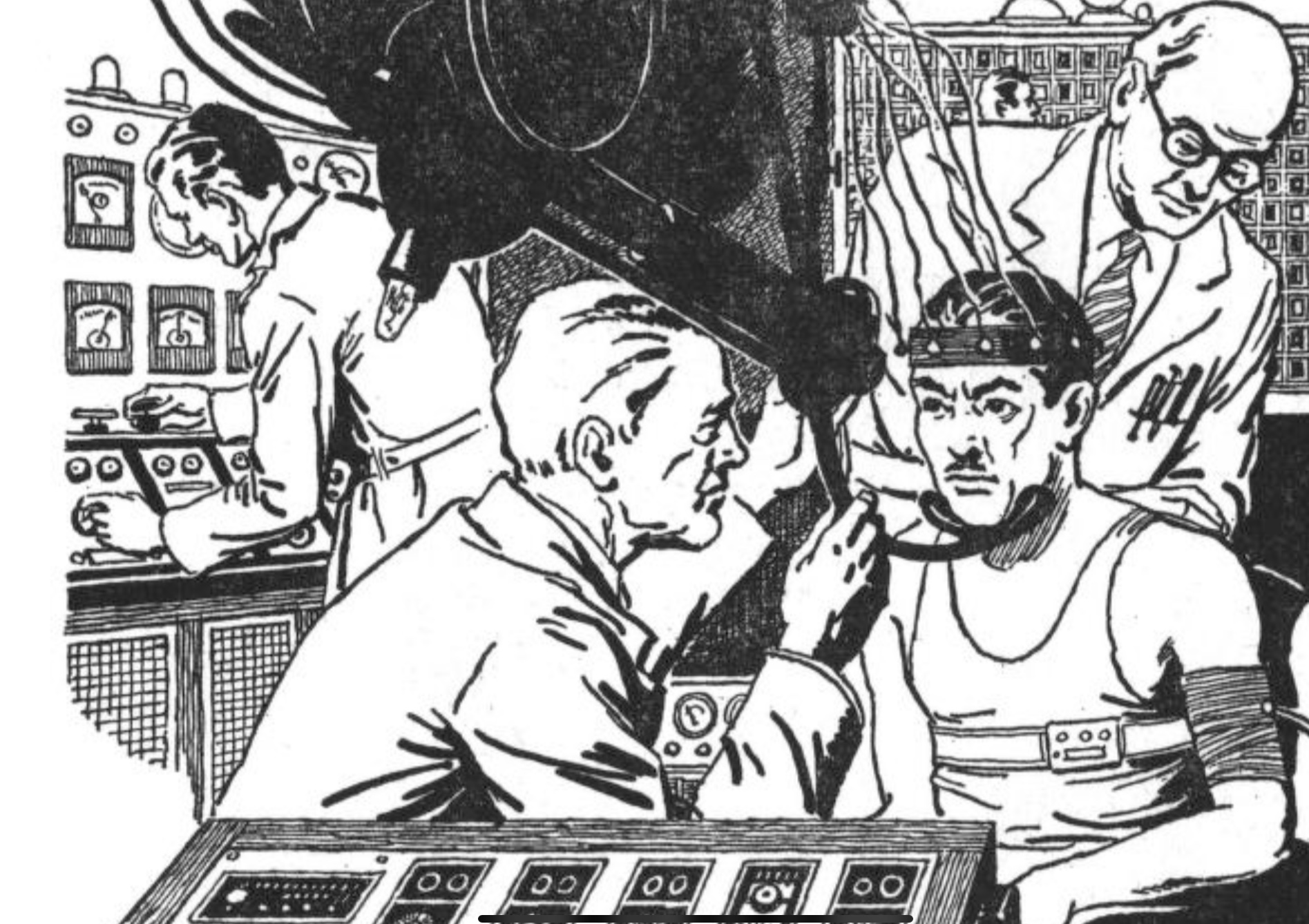
    Such visceral, subconscious voting is deeply problematic from a liberal democratic perspective. Firstly, one of the moral foundations of liberal democracy is that individuals possess free will and personal autonomy, which enable them to define and pursue own conceptions of the good. Democratic participation through egual voting recognises this moral capacity of each citizen. The idea that we need machines to help us discover our ‘true’ inner political inclinations and preferences undermines the moral standing of individuals to participate in democratic politics (surely, the debate about the existence of free will and the self is not new and touches on issues beyond political participation).

    Secondly, machine voting also undercuts the colective and deliberative dimensions of democracy. Democratic politics is not limited to aggregating individual preferences, but is supposed to also enable preference formation and deliberation. If people cannot know their preferences and are not able to express these publicly, they connot convince others, change their mind or find a compromise. This brings to mind the recent case of political polarisation on social media platforms, where algorithms are deployed to reinforce political stances by building effective fire-walls between different political camps. In such case, people are still free to express their opinions and preferences but their discursive and deliberative space is seriously restricted by algorithms. With algorithms digging deeper into our guts, we can imagine a world of automatic politics and algorithmic government akin to the invisible world of financial transactions carried on by financial bots.

    While we still hold elections in which (almost) all people vote, computers and smart algorithms are increasingly deployed in many social areas and they are set to affect our ways of doing and thinking politics. Asimov’s story is fascinately relevant today because it touches on a number of  key issues related to algorithms, politics and society. Asimov’s machine is a black box  that is kept under a veil of secrecy and of hardly dissimulated coercion, embodied by the secret service agent Handley (“Now we don’t question Multivac, do we?”). The machine is dependent of the data it is fed with, thus prone to data and function creep: “Multivac can’t know everything about everybody until he’s fed all data there is”.  In the beginning, the machine had to extract information from a mumber of citizens but, as its algorithms improved, the base of representation was reduced to just one citizen. This is a hint that further improvement might lead to eliminating human direct interaction altogether. When a computer “will understand better than you yourself”, why would it bother to ask any of us what we think?

    Even if feasible, the idea of decoding people’s true selves and of perfectly computing their deep political inclinations into a perfect political outcome misses the point of democratic politics. Whatever one’s true self is, democratic politics is not merely about collecting free-standing individual preferences. Democratic politics is also about reaching the best collective decisions, given the circumstances. It might well be true that, deep inside, many of us are at least a bit selfish, hedonist, even rasist etc. but we still count on each other to restrain such ‘true’ inclinations as much as possible for the sake of living together in a political society. Our ‘true’ political self is not a thing that could be extracted from our guts or download from our brain. As with the Socratic journey of self-finding, the political self emerges (or should emerge) from an ongoing confrontation of political dispositions and judgements. There is never a single or ‘true-to-oneself’ answer to a political question, which a smart machine would be able spit out. Even if there was something close to a true answer, being able to choose wrongly is a privilege of personal freedom. Sometimes, a person might just want “to vote cockeyed just for the pleasure of it”, as Granpa Matthew in Asimov’s story would like.

    Entrusting machines to do our (sometimes dirty) work of politics amounts to moral laziness and could deeply undermine our sense of personal freedom and political responsibility.

    Share this:

    • Click to email a link to a friend (Opens in new window) Email
    • More
    • Click to share on X (Opens in new window) X
    • Click to share on Facebook (Opens in new window) Facebook
    • Click to print (Opens in new window) Print
    • Click to share on WhatsApp (Opens in new window) WhatsApp
    • Click to share on Bluesky (Opens in new window) Bluesky
    • Click to share on LinkedIn (Opens in new window) LinkedIn
    • Click to share on Pocket (Opens in new window) Pocket
    Like Loading…
  • The unbearable cleverness of algorithmic citizenship

    25/08/2025

    Adam: Have you watched the news?

    Eve: Oh! Poor children…

    Adam: Imagine, all three of them had genetic mutations that would have prevented them from living worthy lives.

    Eve: Lucky fat guy!

    Adam: Well, good that the trolley was connected to the Central Unit. Who else would have been able to tell?

    Eve: Yet, poor children!

    (more…)

    Share this:

    • Click to email a link to a friend (Opens in new window) Email
    • More
    • Click to share on X (Opens in new window) X
    • Click to share on Facebook (Opens in new window) Facebook
    • Click to print (Opens in new window) Print
    • Click to share on WhatsApp (Opens in new window) WhatsApp
    • Click to share on Bluesky (Opens in new window) Bluesky
    • Click to share on LinkedIn (Opens in new window) LinkedIn
    • Click to share on Pocket (Opens in new window) Pocket
    Like Loading…
  • [Draft] genesis

    25/08/2025
    On the first day God showed up
    On the second day God made stuff
    On the third day God created humans
    On the fourth day humans invented the computer
    On the fifth day humans pilled up lots of data
    On the sixth day humans crafted AI
    On the seventh day … [insert your hopes, fears, dreams, frustrations, etc. here] … happened.

    Share this:

    • Click to email a link to a friend (Opens in new window) Email
    • More
    • Click to share on X (Opens in new window) X
    • Click to share on Facebook (Opens in new window) Facebook
    • Click to print (Opens in new window) Print
    • Click to share on WhatsApp (Opens in new window) WhatsApp
    • Click to share on Bluesky (Opens in new window) Bluesky
    • Click to share on LinkedIn (Opens in new window) LinkedIn
    • Click to share on Pocket (Opens in new window) Pocket
    Like Loading…
  • The Citizen, the Tyrant, and the Tyranny of Patterns

    24/06/2019

    Previously published on Verfassungsblog, Debate on China‘s Social Credit Sysrem, 2019


    I agree with Wessel Reijers that social scoring systems limit political freedom and instrumentalise citizenship to impose social control. While technologies have always been used for political ends, the latest technologies relying on big data and complex algorithms offer uniquely powerful and highly effective tools to survey people, quash dissent, and reinforce an authoritarian rule. What is new is a wide appeal of technologies as ‘fixes’ for pressing social and political issues. Building on their ‘success’ in commercial sectors (banking and marketing), predictive algorithms and scoring systems are enthusiastically adopted by governmental agencies throughout the world to help making decisions in areas such as criminal justice, welfare, and border control. The Chinese Social Credit scheme is nevertheless unique because of its ambition to aggregate data from a wide variety of sources to provide a set of prescriptive algorithms for “good citizenship” that is backed by state coercion. 

    (more…)

    Share this:

    • Click to email a link to a friend (Opens in new window) Email
    • More
    • Click to share on X (Opens in new window) X
    • Click to share on Facebook (Opens in new window) Facebook
    • Click to print (Opens in new window) Print
    • Click to share on WhatsApp (Opens in new window) WhatsApp
    • Click to share on Bluesky (Opens in new window) Bluesky
    • Click to share on LinkedIn (Opens in new window) LinkedIn
    • Click to share on Pocket (Opens in new window) Pocket
    Like Loading…
  • Citizenship Forecast: Partly Cloudy with Chances of Algorithms

    24/06/2018

    Previously published in R. Bauböck (ed.), Debating Transformations of National Citizenship, IMISCOE Research Series, 2018


    In his thought-provoking kick-off contribution, Liav Orgad (1) enthusiastically embraces the idea of a global digital citizenship that could remedy some of the deficiencies of the present system of territorial national citizenships and, potentially, transform the meaning of democratic citizenship. Technologies such as blockchain could allow people to create virtual communities based on shared interests and sustained by instantaneous consent, beyond the reach of nosy governments and regardless of national borders. By widening access to rights, expanding political voice and creating more secure and diverse identities, digital citizenship could address current challenges related to the imperfect attribution of status and rights (statelessness, disenfranchisement), widespread political apathy among citizens and artificial divisions created by national borders. To paraphrase the text of a famous cartoon: ‘on the internet nobody knows you are a foreigner’.

    (more…)

    Share this:

    • Click to email a link to a friend (Opens in new window) Email
    • More
    • Click to share on X (Opens in new window) X
    • Click to share on Facebook (Opens in new window) Facebook
    • Click to print (Opens in new window) Print
    • Click to share on WhatsApp (Opens in new window) WhatsApp
    • Click to share on Bluesky (Opens in new window) Bluesky
    • Click to share on LinkedIn (Opens in new window) LinkedIn
    • Click to share on Pocket (Opens in new window) Pocket
    Like Loading…
  • @pocalipsă

    17/04/2018

    crapă lumea
    e potop
    dau hunii
    avarii
    gepizii
    tătarii
    pecenegii
    vandalii
    vin jihadiștii
    ecologiștii
    populiștii
    nudiștii
    excomuniștii
    ne umple bacteriile
    eurile
    imeilurile
    se dărâmă blocurile
    duduie blogurile
    e jale
    e nașpa
    crapă lumea
    cade netu.

    Share this:

    • Click to email a link to a friend (Opens in new window) Email
    • More
    • Click to share on X (Opens in new window) X
    • Click to share on Facebook (Opens in new window) Facebook
    • Click to print (Opens in new window) Print
    • Click to share on WhatsApp (Opens in new window) WhatsApp
    • Click to share on Bluesky (Opens in new window) Bluesky
    • Click to share on LinkedIn (Opens in new window) LinkedIn
    • Click to share on Pocket (Opens in new window) Pocket
    Like Loading…
  • stimaţi cititori

    17/04/2018

    cei mai stimaţi oameni
    nu sunteţi voi
    cititorii
    ci călătorii
    ei sunt stimaţi în orice gară
    la plecarea
    şi la sosirea
    oricărui nenorocit de tren
    pe bune!

    Share this:

    • Click to email a link to a friend (Opens in new window) Email
    • More
    • Click to share on X (Opens in new window) X
    • Click to share on Facebook (Opens in new window) Facebook
    • Click to print (Opens in new window) Print
    • Click to share on WhatsApp (Opens in new window) WhatsApp
    • Click to share on Bluesky (Opens in new window) Bluesky
    • Click to share on LinkedIn (Opens in new window) LinkedIn
    • Click to share on Pocket (Opens in new window) Pocket
    Like Loading…
  • ce-i faci?

    17/04/2018

    ce-i faci dorului când doare?
    Scoti cutitu
    tai o floare
    pui balegă
    pui sare
    ungi cu sâmbure
    cu fluture
    pui oloi
    pui strigoi
    dai drumu la câni
    te sui in pod
    faci un nod
    te speli pe mâni
    ce-i faci, tată?

    Share this:

    • Click to email a link to a friend (Opens in new window) Email
    • More
    • Click to share on X (Opens in new window) X
    • Click to share on Facebook (Opens in new window) Facebook
    • Click to print (Opens in new window) Print
    • Click to share on WhatsApp (Opens in new window) WhatsApp
    • Click to share on Bluesky (Opens in new window) Bluesky
    • Click to share on LinkedIn (Opens in new window) LinkedIn
    • Click to share on Pocket (Opens in new window) Pocket
    Like Loading…
  • cicãtoare

    17/04/2018

    cicã
    a murit de cancer
    de abces
    de inimã rea
    de ciumã
    de plictisealã
    de dragoste
    de ficat
    de nerãbdare
    de
    hai sã fim seriosi
    se moare numai de
    moarte

    Share this:

    • Click to email a link to a friend (Opens in new window) Email
    • More
    • Click to share on X (Opens in new window) X
    • Click to share on Facebook (Opens in new window) Facebook
    • Click to print (Opens in new window) Print
    • Click to share on WhatsApp (Opens in new window) WhatsApp
    • Click to share on Bluesky (Opens in new window) Bluesky
    • Click to share on LinkedIn (Opens in new window) LinkedIn
    • Click to share on Pocket (Opens in new window) Pocket
    Like Loading…
  • pe clitoral

    17/04/2018

    univers divin
    uterin
    îngeri sprinţari
    fâlfâie-n van
    aripi
    din păr pubian
    cerul diform
    gură de ţânc
    sân flasc
    tânjind după
    sfârc

    Share this:

    • Click to email a link to a friend (Opens in new window) Email
    • More
    • Click to share on X (Opens in new window) X
    • Click to share on Facebook (Opens in new window) Facebook
    • Click to print (Opens in new window) Print
    • Click to share on WhatsApp (Opens in new window) WhatsApp
    • Click to share on Bluesky (Opens in new window) Bluesky
    • Click to share on LinkedIn (Opens in new window) LinkedIn
    • Click to share on Pocket (Opens in new window) Pocket
    Like Loading…
  • sarea din mare

    17/04/2018

    un peste mic
    din atlantic
    viseaza
    zilnic
    un ibric
    de-a lui sudoare
    marea devine
    cu fiecare zi
    mai mare

    Share this:

    • Click to email a link to a friend (Opens in new window) Email
    • More
    • Click to share on X (Opens in new window) X
    • Click to share on Facebook (Opens in new window) Facebook
    • Click to print (Opens in new window) Print
    • Click to share on WhatsApp (Opens in new window) WhatsApp
    • Click to share on Bluesky (Opens in new window) Bluesky
    • Click to share on LinkedIn (Opens in new window) LinkedIn
    • Click to share on Pocket (Opens in new window) Pocket
    Like Loading…
  • globvalizare

    17/04/2018

    un oval
    global
    nici total
    nici final
    trăgea un jug
    ca un coşciug
    închipuindu-se
    fatal
    sosia unui cal
    primordial

    Share this:

    • Click to email a link to a friend (Opens in new window) Email
    • More
    • Click to share on X (Opens in new window) X
    • Click to share on Facebook (Opens in new window) Facebook
    • Click to print (Opens in new window) Print
    • Click to share on WhatsApp (Opens in new window) WhatsApp
    • Click to share on Bluesky (Opens in new window) Bluesky
    • Click to share on LinkedIn (Opens in new window) LinkedIn
    • Click to share on Pocket (Opens in new window) Pocket
    Like Loading…
  • în toate balcoanele

    17/04/2018

    în toate balcoanele în care am fost
    m-am simţit singur
    precum sticlele goale puşcă
    băute despuiate
    prăfuite precum teneşii
    purtaţi în viteză scofâlciţi
    lăsaţi la odihnă precum caii
    dezvăţaţi de câmpie deşălaţi
    trişti precum sateliţii artificiali eşuaţi în orbite
    incapabili de umbră muţi
    singuri precum oamenii
    lăsaţi de izbelişte pe balcoane

    Share this:

    • Click to email a link to a friend (Opens in new window) Email
    • More
    • Click to share on X (Opens in new window) X
    • Click to share on Facebook (Opens in new window) Facebook
    • Click to print (Opens in new window) Print
    • Click to share on WhatsApp (Opens in new window) WhatsApp
    • Click to share on Bluesky (Opens in new window) Bluesky
    • Click to share on LinkedIn (Opens in new window) LinkedIn
    • Click to share on Pocket (Opens in new window) Pocket
    Like Loading…
  • axiomă

    17/04/2018

    un punct
    de vedere
    şi un punct
    de orbire
    fac
    o dreaptă mioapă

    Share this:

    • Click to email a link to a friend (Opens in new window) Email
    • More
    • Click to share on X (Opens in new window) X
    • Click to share on Facebook (Opens in new window) Facebook
    • Click to print (Opens in new window) Print
    • Click to share on WhatsApp (Opens in new window) WhatsApp
    • Click to share on Bluesky (Opens in new window) Bluesky
    • Click to share on LinkedIn (Opens in new window) LinkedIn
    • Click to share on Pocket (Opens in new window) Pocket
    Like Loading…
  • balada imigrantului

    17/04/2018

    mut
    mov
    derbedeu
    stau pe gând
    ca pe veceu
    orfan de gurã
    titirez
    troscot
    vãgãunã
    gât strâmt
    plin
    latrinã
    întro limbã strainã

    Share this:

    • Click to email a link to a friend (Opens in new window) Email
    • More
    • Click to share on X (Opens in new window) X
    • Click to share on Facebook (Opens in new window) Facebook
    • Click to print (Opens in new window) Print
    • Click to share on WhatsApp (Opens in new window) WhatsApp
    • Click to share on Bluesky (Opens in new window) Bluesky
    • Click to share on LinkedIn (Opens in new window) LinkedIn
    • Click to share on Pocket (Opens in new window) Pocket
    Like Loading…

Blog at WordPress.com.


Loading Comments...
 

    • Subscribe Subscribed
      • A citizen with a view
      • Already have a WordPress.com account? Log in now.
      • A citizen with a view
      • Subscribe Subscribed
      • Sign up
      • Log in
      • Report this content
      • View site in Reader
      • Manage subscriptions
      • Collapse this bar
    %d